NAB 2025. IBC 2025. ISE 2026. And now, Field to Air at NAB 2026. Here’s what these partner ecosystems taught us.
Las Vegas in April. The buffets are open. The show floor is buzzing. And somewhere in West Hall, a team of people is setting up a live broadcast workflow that spans multiple halls of the Las Vegas Convention Center, involves six technology partners, and depends entirely on a network that has absolutely no intention of failing.
This is Field to Air. And it’s the fourth partner ecosystem Dejero has built in the past year.
How we got here
It started simply enough or at least, it seemed simple at the time.
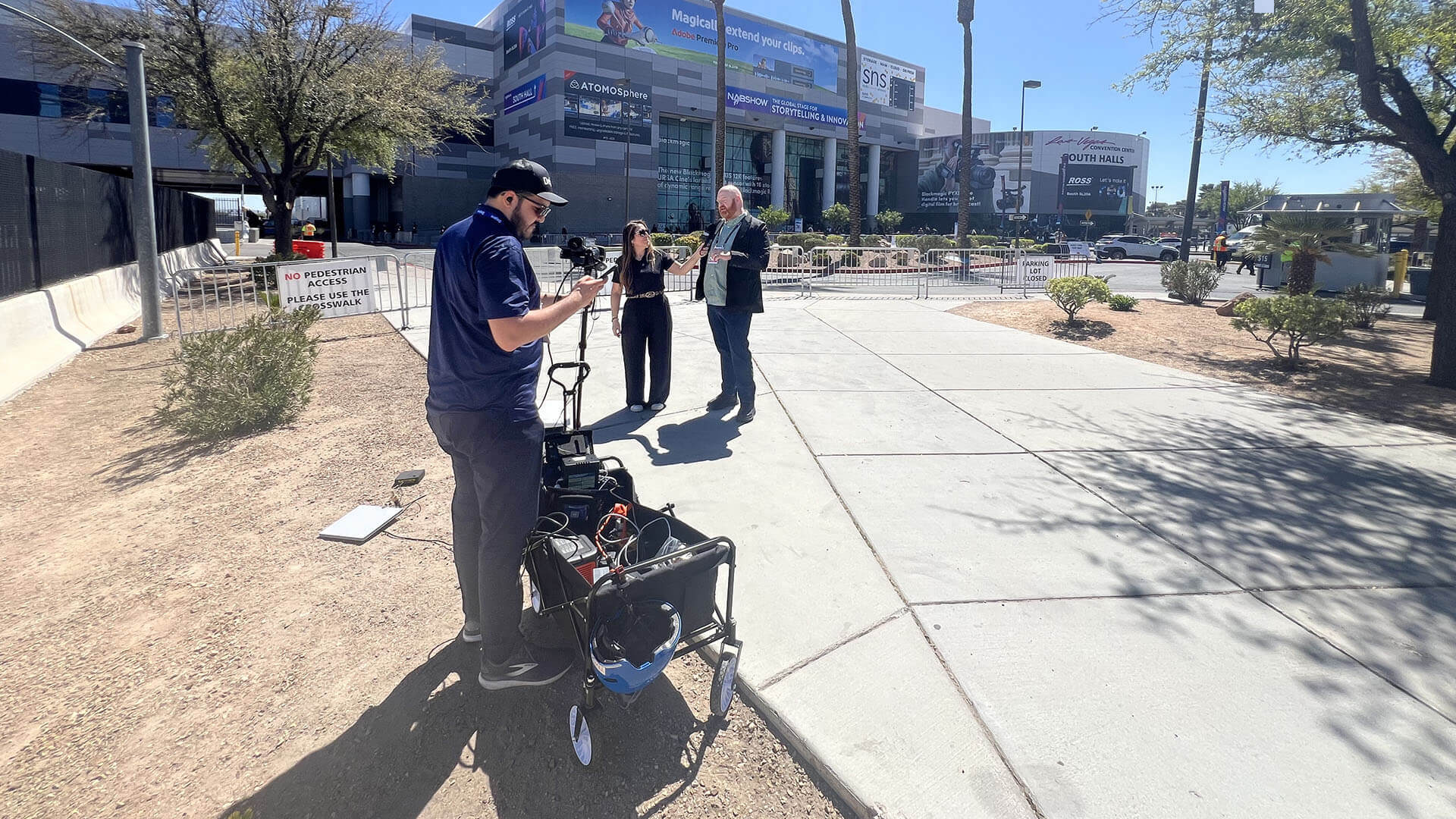
At NAB 2025, Dejero went live on a show floor with a partner ecosystem for the first time. Eutelsat brought satellite. Grabyo brought cloud production. We brought connectivity and the quiet confidence of people who had tested this significantly more than they let on.
It worked. Not just technically, though it did work technically, but as a demonstration of something the broadcast industry doesn’t see often enough: technology from different companies, built by different teams, actually functioning together in real time.
So we kept going.
IBC 2025 in Amsterdam: bigger. ISE 2026 in Barcelona: eight partners, an LED volume, a virtual production workflow, and, to everyone’s considerable pleasure, an award. (The Dejero blog post about that one is titled “We Brought Storm ISE to Barcelona and Won an Award for It,” which remains one of our more accurate headlines.)
Each activation taught us something. About coordination across companies. About what “live” actually demands from a signal chain. About how to have very productive conversations with partner engineers the night before a show opens.
What we’re doing at NAB 2026
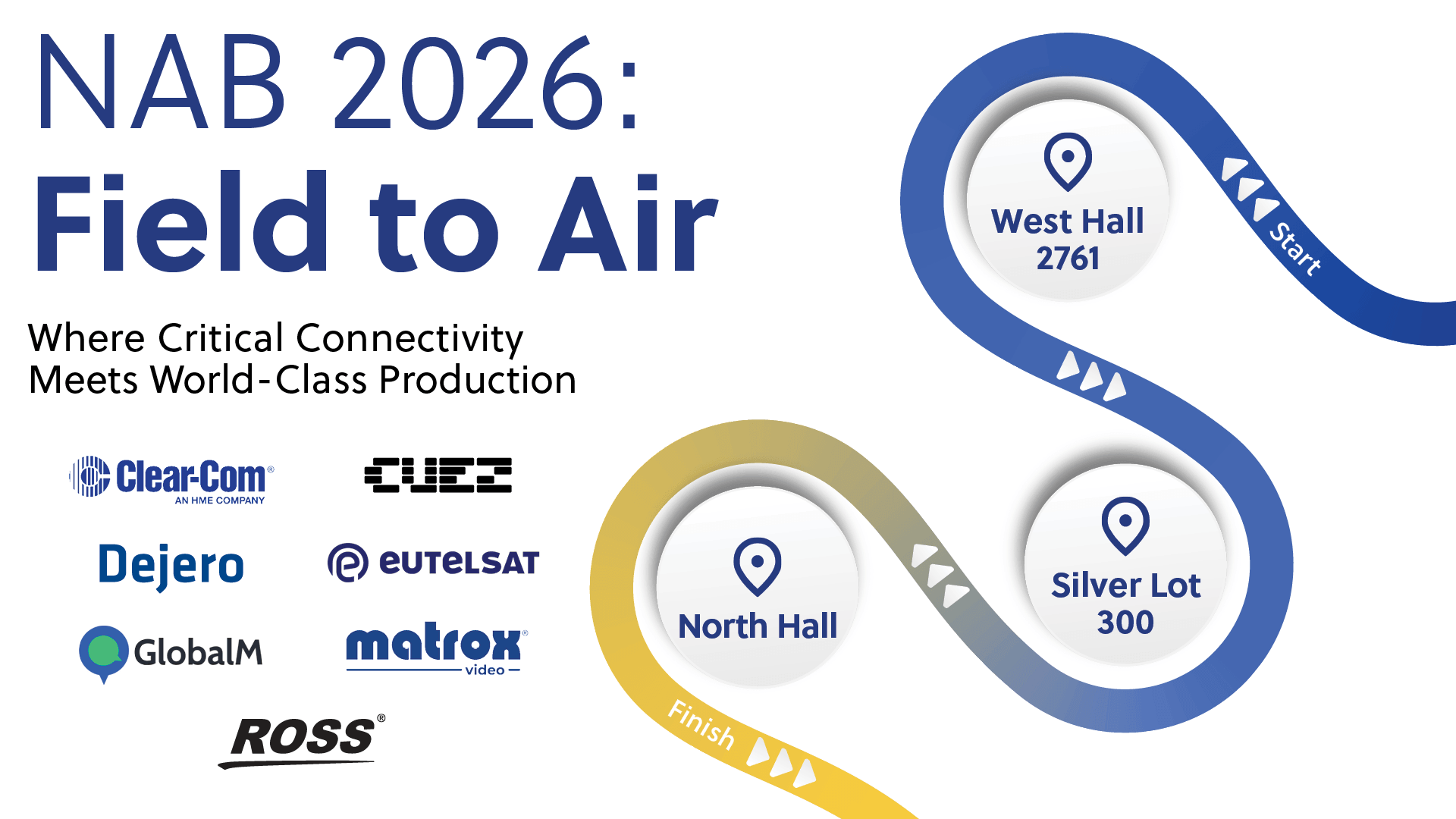
This year’s ecosystem is the most technically ambitious one we’ve built. Six partners. One continuous signal path from field to air.
The workflow: a Dejero EnGo 3 captures live video in the field, blending cellular and Eutelsat’s OneWeb LEO satellite via Smart Blending Technology. TITAN Command encodes via Matrox’s Monarch EDGE using SRT. GlobalM distributes the feed simultaneously to partner booths across the show floor, Ross Video, Matrox Video, Clear-Com, Eutelsat, each decoding and integrating the signal into their own live workflows. Clear-Com handles intercom and tally on a separate IP path. Cuez runs the rundown. And the whole thing streams live to YouTube.
The diagram for this workflow is, and we say this with affection, a lot.
But that’s the point. Modern broadcast production is a lot. It doesn’t happen in one booth, from one vendor, on one system. It happens across distributed infrastructure, across companies, across signal paths that each have their own demands. Field to Air is built to reflect that reality, not simplify it away.
Why connectivity is the story
There’s a version of this activation where the technology stack is the headline. The TITAN Command router, the triple 5G modem architecture, the LEO satellite integration, the SRT transport, these are all genuinely interesting things.
But the headline isn’t any one component. The headline is that when connectivity is treated as core infrastructure rather than an afterthought, the entire production chain changes character. Things don’t just work. They hold. Redundancy is built in. The team running the workflow can focus on the production, not on whether the network is going to cooperate.
That’s what four ecosystems across four shows has proven out. Not in a lab. On show floors. In front of real audiences. With real consequences.
Come see it
If you’re at NAB 2026, Field to Air runs daily at Dejero’s booth in West Hall, W2761, and across the partner booths in the North Hall and Silver Lot. Scheduled demos run April 19 at 11am, and April 20–21 at 11am and 2pm PT.
Can’t make it to Las Vegas? (Honestly, the weather in April is a reasonable trade-off.) We’re streaming every session live on YouTube.
Five shows from now, we’ll have a longer story to tell. For now, come watch this one live.
