On the third morning of Targa Newfoundland, I stood in a schoolyard in a community called Happy Adventure, a small scenic outport village located on the Eastport Peninsula in Newfoundland and Labrador, with a microphone in my hand and one bar of cell service, at best. Behind me, race cars lined up at the start. Across the street, kids who’d been let out of class pressed up against the red tape, all smiles. And we were LIVE to the world.
For 25 years, no one outside Newfoundland could watch Targa race. When I sat down with founder Robert Giannou, he told me that 98% of the event’s 2,000-kilometre route couldn’t support live video. This September, that changed. For the first time in the event’s history, it streamed live on YouTube, and the feed travelled across the Atlantic to IBC in Amsterdam.
It was my first time in Newfoundland and Labrador. I spent most of the week on the roadside doing interviews, and I came home with more than a set of results. I came home with a completely new perspective on this place and its people, and on what it really takes to tell a story live.
The wins
The early numbers tell part of the story:
- The Targa YouTube channel nearly tripled its lifetime views in about 10 weeks, from 11,736 to roughly 37,000
- 19,457 YouTube views during race week alone
- 988 new subscribers this year, up from 95 the year before
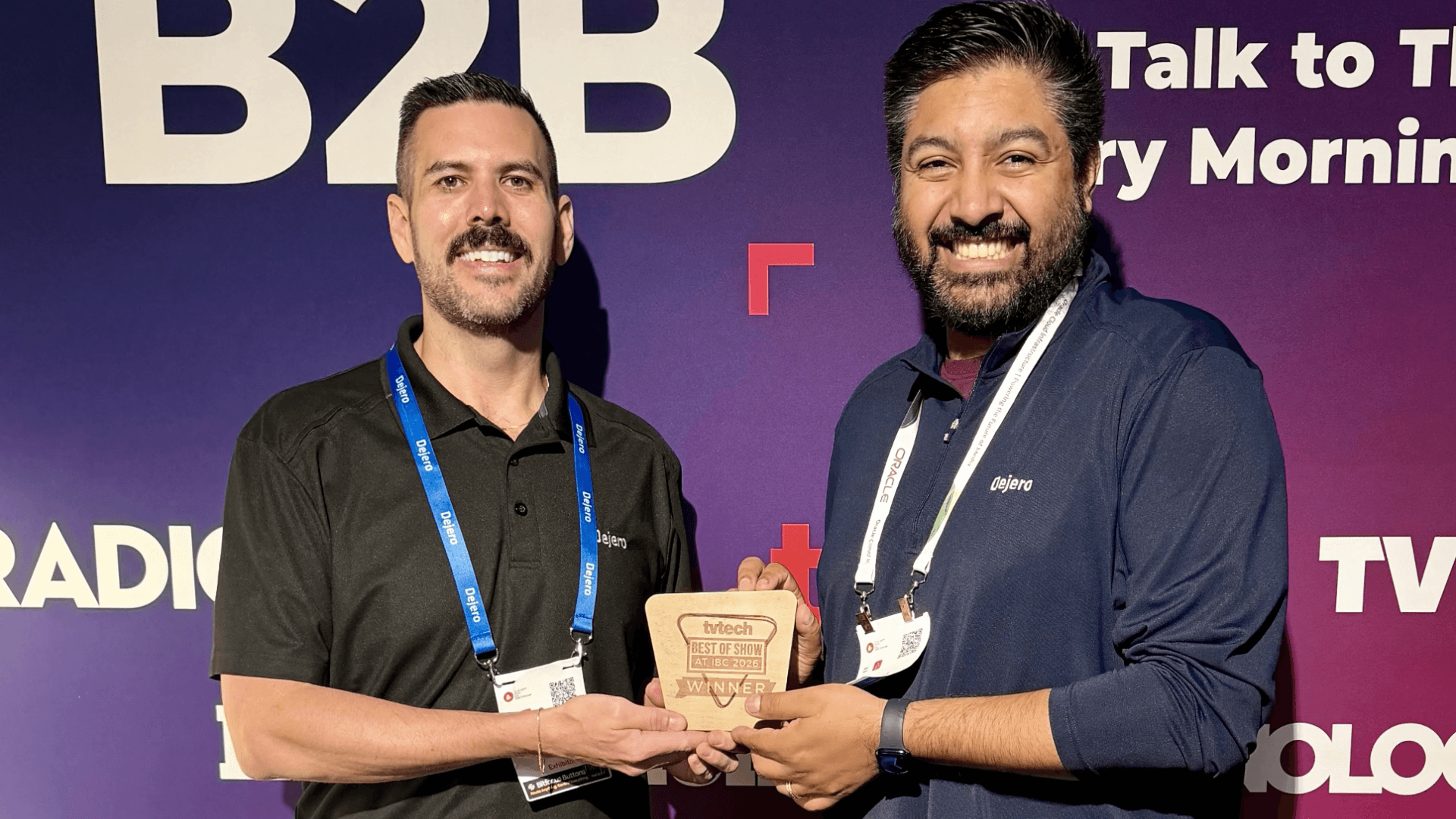
- At IBC, Dejero TITAN Command, the triple 5G router powered by Smart Blending Technology, won a Best of Show award from TV Tech
Robert put it best when he described what it meant to send images from the easternmost point in North America to a global stage in Amsterdam:
“a remarkable testament to Canadian technology and a beautiful advertisement for our province.”
The numbers matter. But the lessons are what I’ll carry into every project from here.
Riding Along with Champions
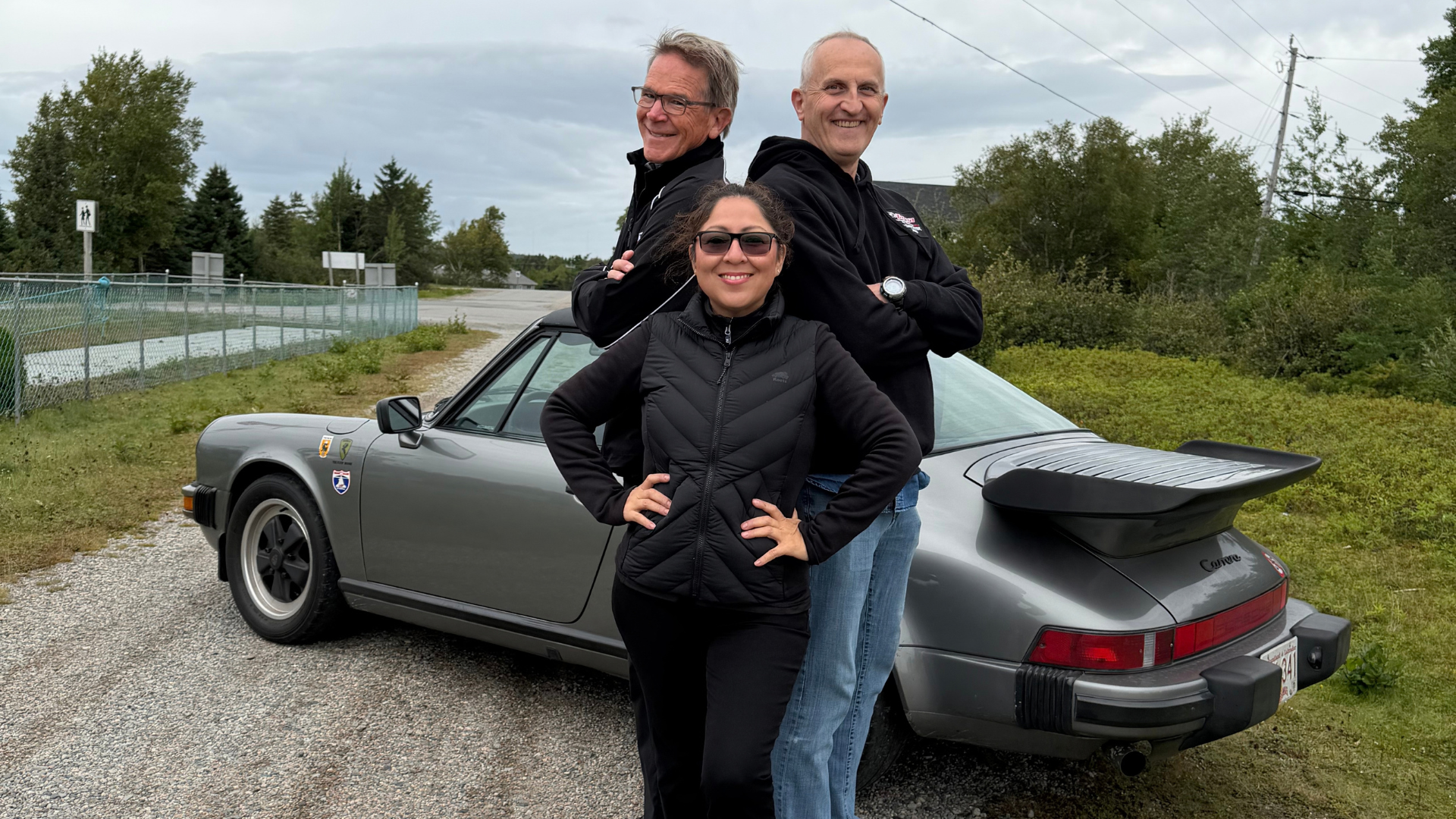
I spent race week alongside two of the best teachers I could have asked for. Randy Pobst and Paul Abbott have won Targa Newfoundland twice as a team, and this year they traded the driver’s seat for the host’s chair. Randy brings a bigger-than-life personality to everything he does. Paul, a Newfoundlander, brings a quiet confidence and a comedic spark that sneaks up on you. I was their reporter on the ground, learning about cars and competition in a way I never had before.
Their first piece of advice surprised me: don’t look at the view. On these roads, the scenery is breathtaking around every corner, and that’s exactly the danger. Eyes stay on the road, because it can get rough in a hurry, and that’s before the rain and wind roll in. Paul called the turns from the navigator’s seat, and he joked that on the tightest village stages, where houses and churches sit right up against the pavement, “I usually close my eyes on that stuff.”
What stayed with me most was how they talked about mindset.
“When I leave the line, it focuses my brain and I’m just smarter, more capable, a better person,” Randy said.
Yes, winning matters to both of them. But after a week of listening to them, I understood that skill, preparation and headspace are what make winning possible.
Lesson 1: Drive what you can see
Not every corner at Targa is in the route book. As driver Randy Pobst explained on the stream, sometimes the navigator’s only instruction is simple: drive what you can see. Read the trees. Read the telephone poles. Feel how the road changes as you get closer to the coast.
Live production works the same way. We planned for months, and on day two we still hit technical issues. So we said so on air, thanked viewers for their patience and kept going. The plan gets you to the start line. After that, you drive the road in front of you.
Lesson 2: Live beats perfect
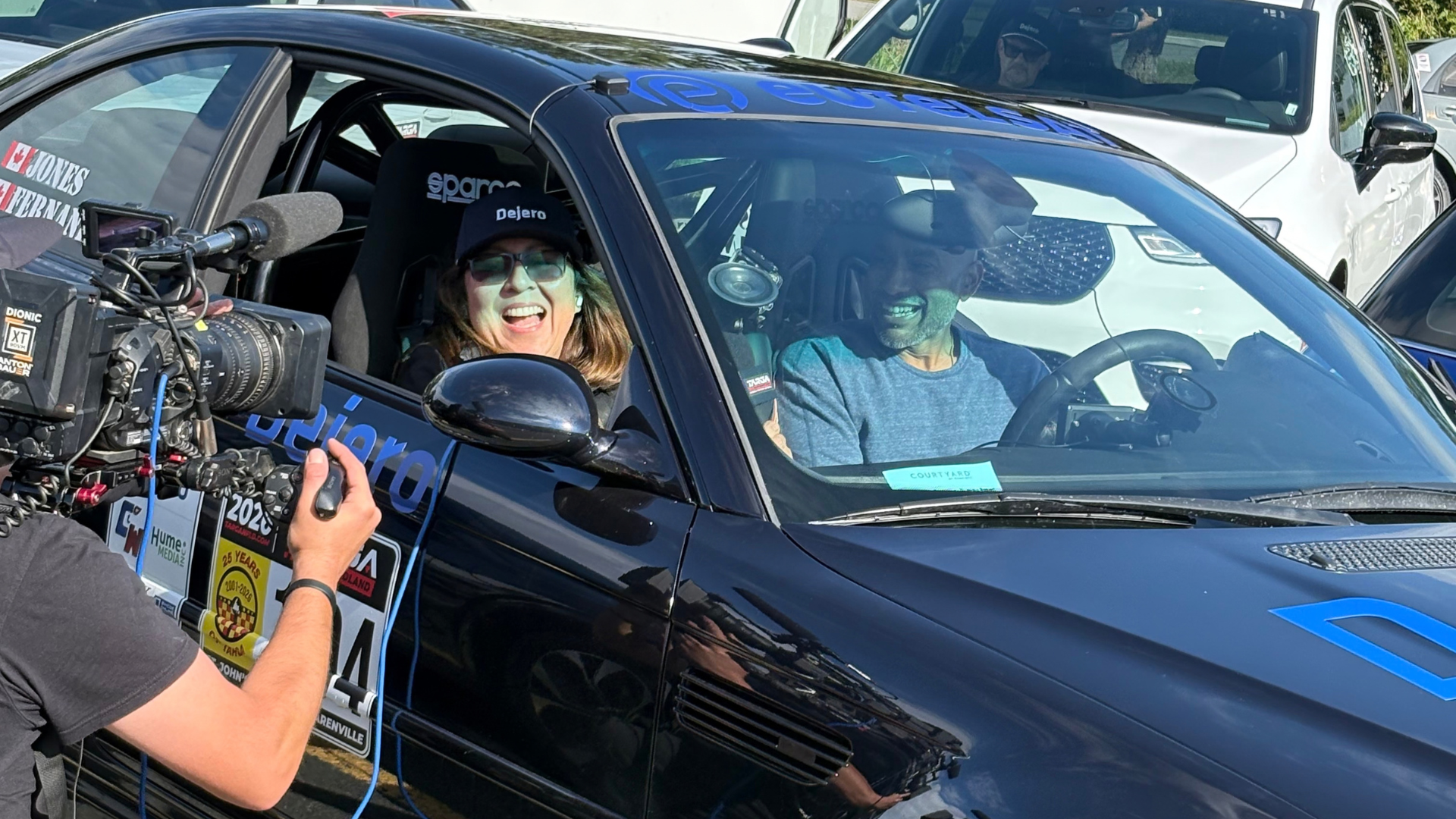
Dejero Chief Revenue Officer, Kevin Fernandes was competing in the rally himself, and when I caught him before a stage, he named exactly what made this year different:
“I think it’s really easy to record it and upload it later, but getting even, you know, 20, 30 minutes of live, showing that we can do that.”
A polished recap has its place. But live is the only format that lets someone on the other side of the world feel the moment as it happens. Viewers forgive a dropped shot. What they can’t get anywhere else is being there.
Lesson 3: The people are the story
I’ve spent my career in newsrooms, and I know specs and stats alone rarely make anyone care. People do. And Targa is full of them.
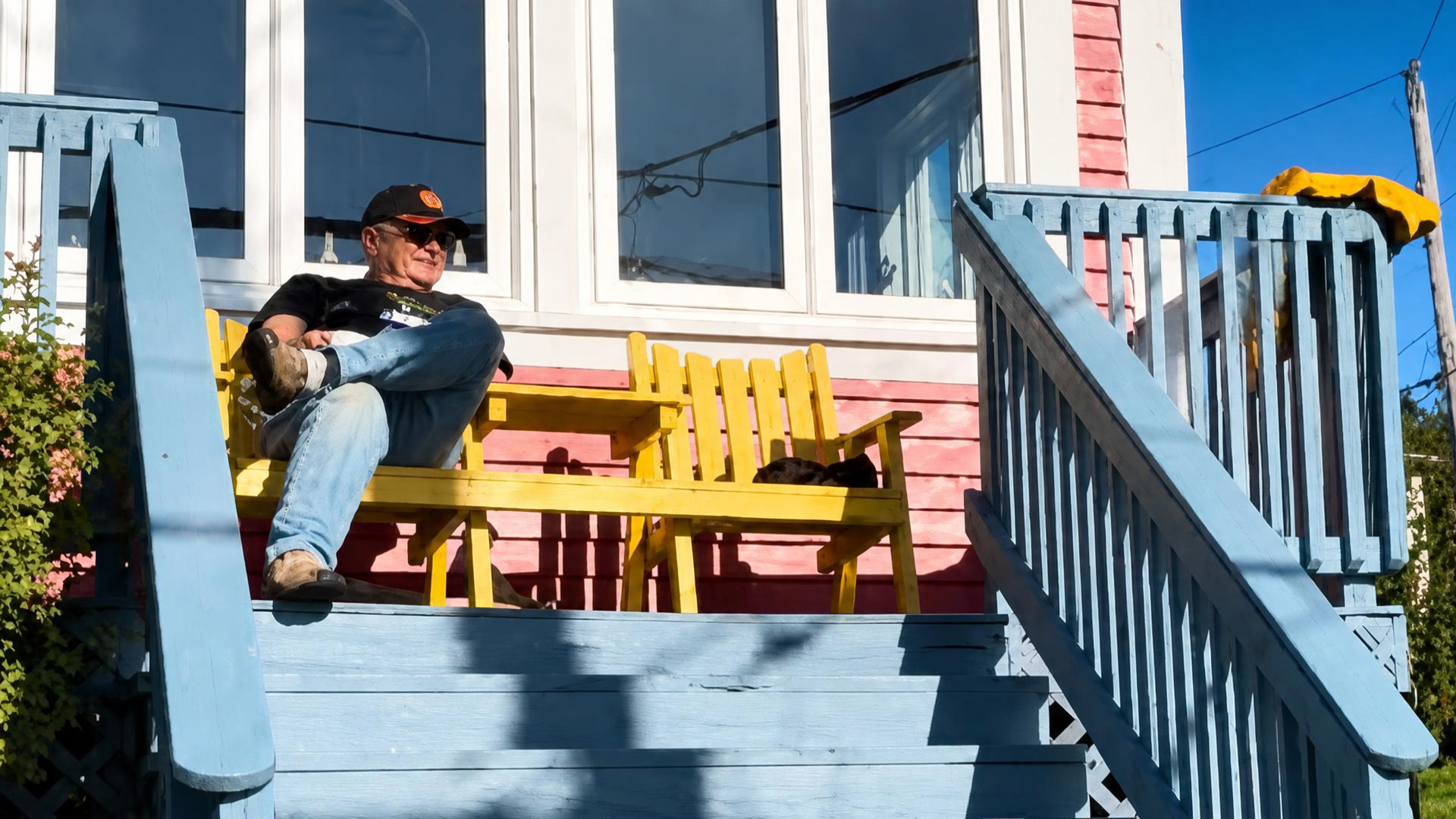
I met a family from Mexico and South Texas racing to raise awareness for sarcoma, a rare cancer affecting a cousin back home. Their daughter learned to drive stick two months before the rally, and the family drove 1,500 miles from Portland, Maine, just to reach the start. I met best friends Lydia Thompson and Jake O’Gorman, racing an orange Volkswagen Golf R Division, wrapped as a pumpkin, a tribute to Lydia’s late father, Wes, who had the car built. And I met Dennis Barrett, originally from Woodbridge, Ontario but a long-time resident of Conception Bay, Newfoundland. When speaking about the race he described the experience of sitting outside his porch as the main attraction.
“If they were sitting on my front deck every morning they would know that heaven couldn’t match it.”
One navigator described his job as “painting a visual picture for him through my voice of exactly what’s going to happen.” I can’t think of a better description of broadcasting.
Lesson 4: Pace yourself
Late in the week, I heard one of the championship contenders, Brett Hueston, explain his strategy: drive as hard as he could within his comfort zone, protect the car, and take no unnecessary risks. “I don’t want to start thinking about the end of the race before we get to the end of the race,” he said. “It’s just another stage and there’s another one after that.”
Targa is an endurance event: early mornings, breathalyzers at dawn, 400-kilometre days, and car shows in the evening. Our team felt that pace too. The days were long, and some were tough. The lesson applies to any campaign that runs for months: it’s won stage by stage, not in one heroic push.
Lesson 5: Community is the real infrastructure
Technology can carry a signal. It takes a community to give it something worth carrying.
When one team’s Subaru needed a new clutch, rally legend Frank Sprongl flew in with one in his luggage, and the car was changed overnight and made the next day’s start. Competitors called their own car clubs to track down parts for rivals. At Happy Adventure, start official Sean Connor summed up how locals felt: “Look at all the people that came out to watch this.”
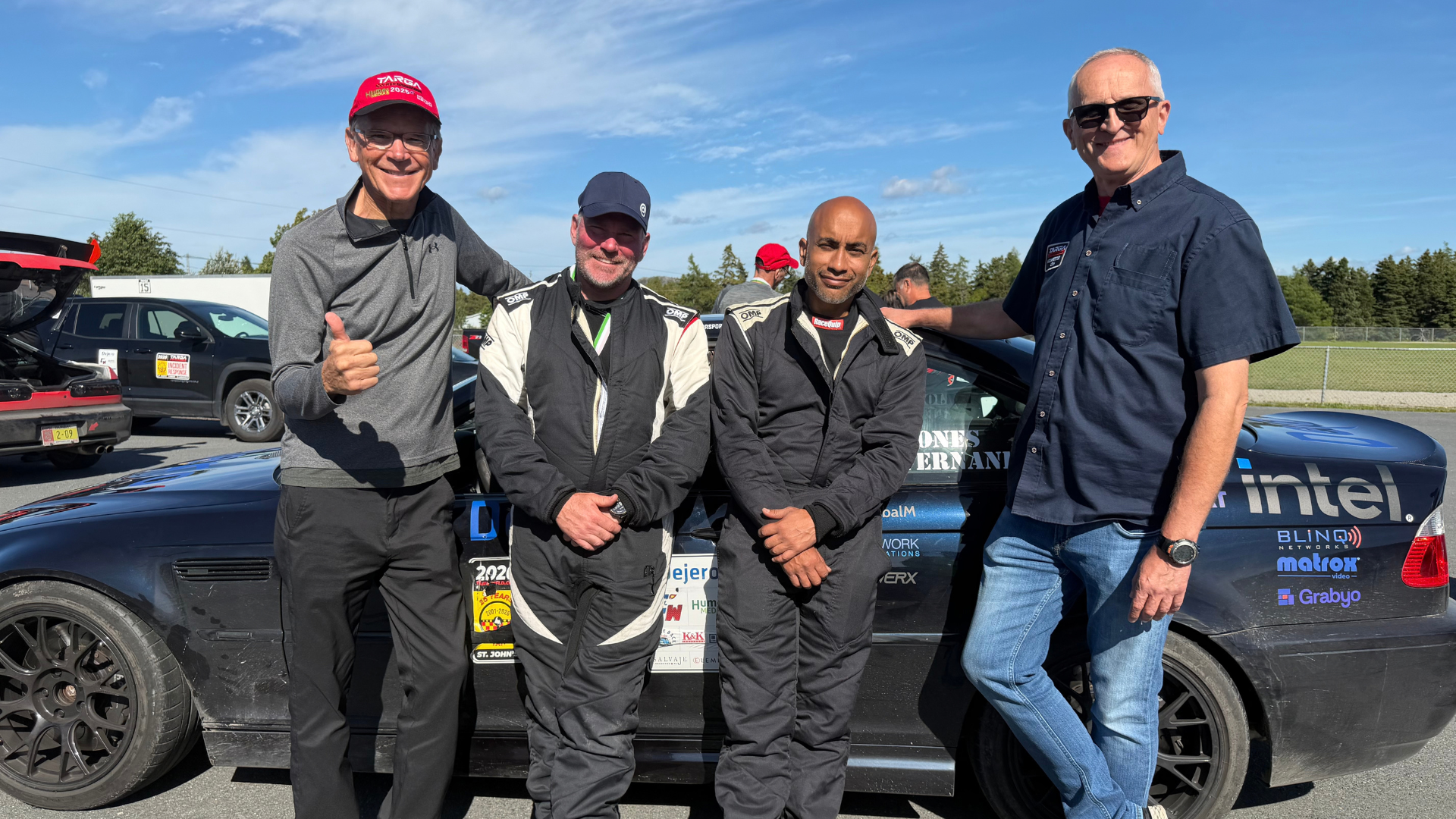
Our own Dejero team lived this firsthand. Kevin Fernandes and Devon Jones nearly didn’t make it to the start line at all. On the drive to St. John’s, the wheel bearing on the trailer carrying their race car failed and had to be replaced before they could go any further. It happened on Labour Day, in the middle of nowhere, but luckily close enough to the only open mechanic in New Brunswick. Once the race began, mechanical problems kept showing up, and more than once it looked like their week was over. Each time, the Targa community stepped in and got the car moving again for the next leg. The last save came right near the end, and Kevin and “Devo” crossed the finish of their first Targa.
Meanwhile, in Amsterdam
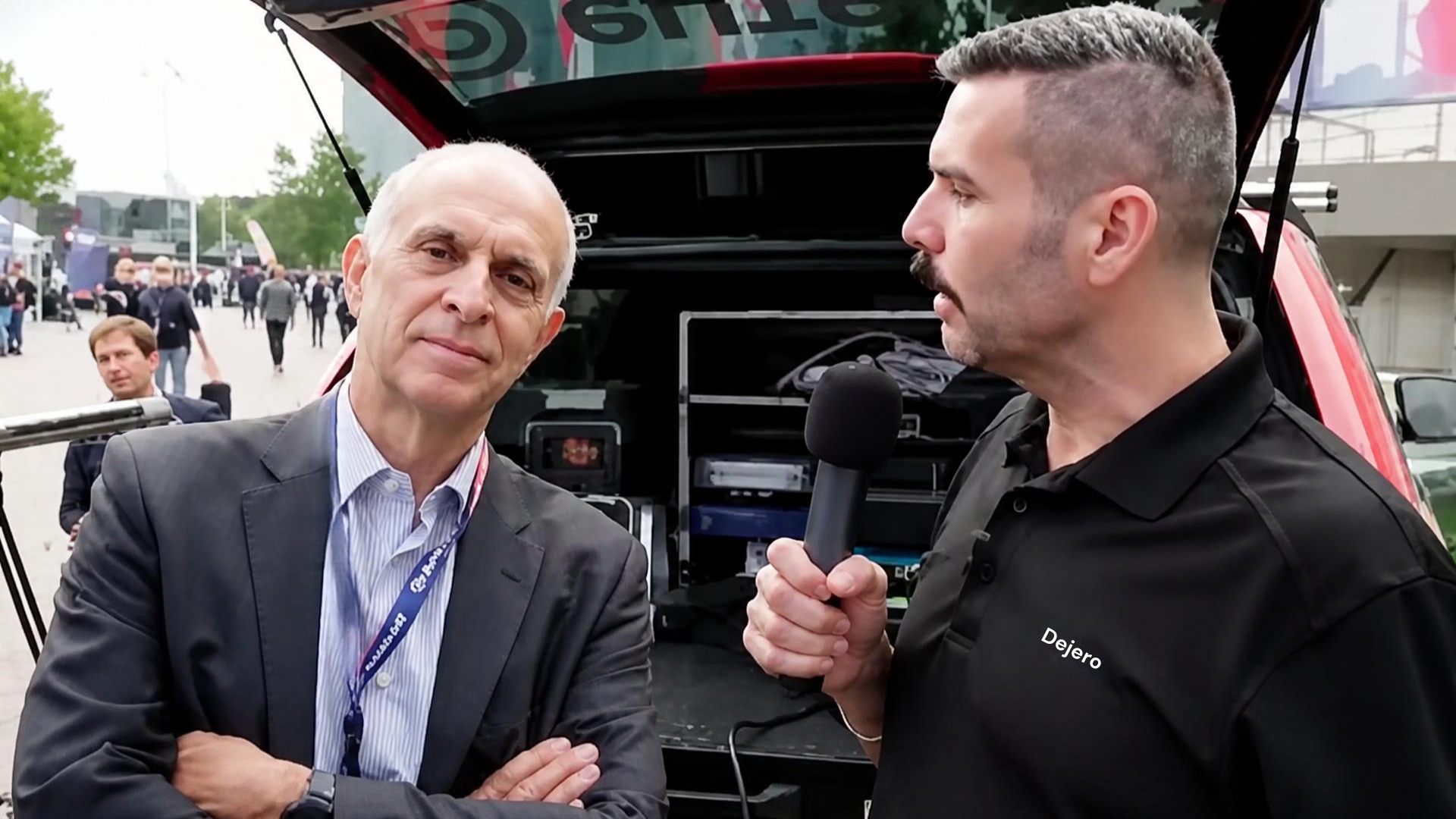
While we chased race cars across Newfoundland, a second small team was carrying just as big a lift more than 4,000 kilometres away. At IBC 2026 in Amsterdam, my Dejero colleagues Michael Stanton and Sukhvir Grewal made sure the livestream was ready on their end. Michael hosted from outside the RAI Amsterdam, where a satellite dish on Eutelsat’s demo vehicle kept the connection flowing, powered by Dejero TITAN Command.
Their days were just as long as ours, but instead of racing stages, they were running trade show livestreams, meeting new customers and reconnecting with partners. And on the final day of the show, Michael and Sukh accepted a Best of Show award for TITAN Command.
It was a reminder that no live broadcast is the work of one company. This one relied on a partner ecosystem with many players joining Dejero, including Eutelsat, BLiNQ Networks, Global M, Grabyo, Matrox Video, Jetwerx, and Network Innovations, each responsible for a different link in the chain with support from ADLINK Technology, Intel, FOR-A and REV TV. Ecosystems like that are complex. When every partner shows up ready, though, the audience never sees the complexity. They just see the race.
From strangers to family
On the final night, one of the organizers told the room that you leave St. John’s as a bunch of strangers and come back as a family. I arrived in Newfoundland and Labrador as a stranger. I left having truly fallen in love with it.
Thank you to everyone who opened their roads, their communities and their stories to us. I can’t wait to see what comes next.