I’ve been in enough conference ballrooms to know the drill. Vendor gets 20 minutes. Slides go up. Eyes go down. Everyone’s checking email by slide three.
So when our team was invited to present at Lumen Technologies‘ Public Sector Sales Kick Off (SKO) in DC, in a room of 200-plus sales professionals focused on accelerating mission success across federal, defense, state and local, and public safety markets, we made a decision: we weren’t going to tell them anything. We were going to show them.
Why Lumen’s Public Sector Bet Matters
First, some context on why being in that room mattered to us.
Lumen’s Public Sector division serves over 300 public sector organizations, backed by 2,100 cleared professionals, 26 secure facilities, and more than 25 government-compliant offerings. They operate across every segment that matters, civilian agencies, defense and intelligence, state and local government, public safety, education, and tribal nations. Their contract vehicles span GSA MAS, GSA Enterprise Infrastructure Solutions (EIS), NASPO Cloud Solutions, and over 140 state and higher education contracts.
This is a company that isn’t just selling connectivity to government agencies, they’re building the trusted network infrastructure that agencies need to deliver on their missions. And right now, with state governments making aggressive investments in AI-ready infrastructure and the demand for high-capacity, secure networks accelerating faster than anyone predicted, the stakes have never been higher.
Lumen knows that. Which is why their SKO opened with a clear message about how they intend to win in the public sector. And the very first pillar of their go-to-market strategy? Partners, for credibility and reach.
That’s not a throwaway bullet on a slide. That’s a strategic signal about the future of this industry.
Show Me, Don’t Tell Me
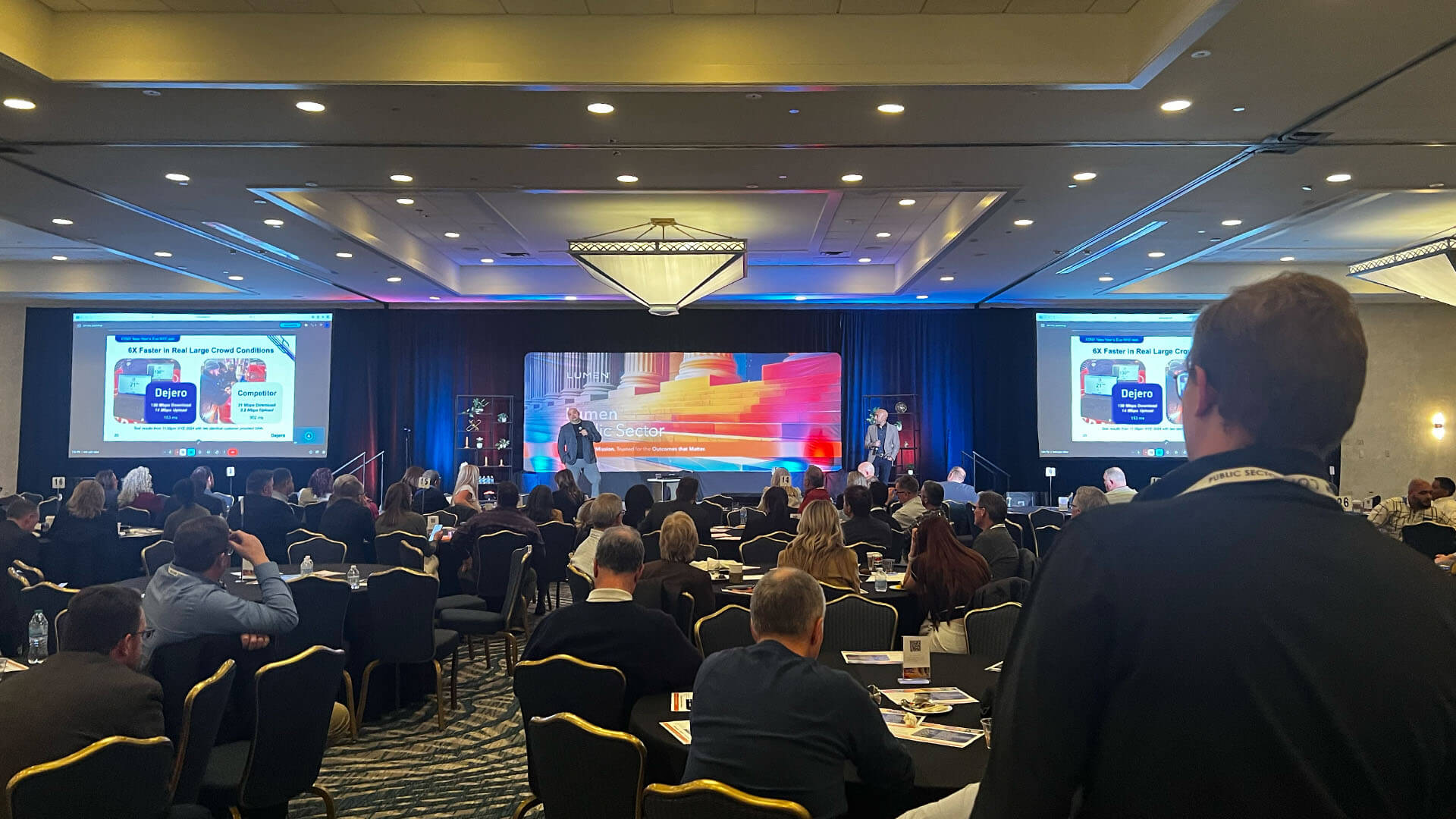
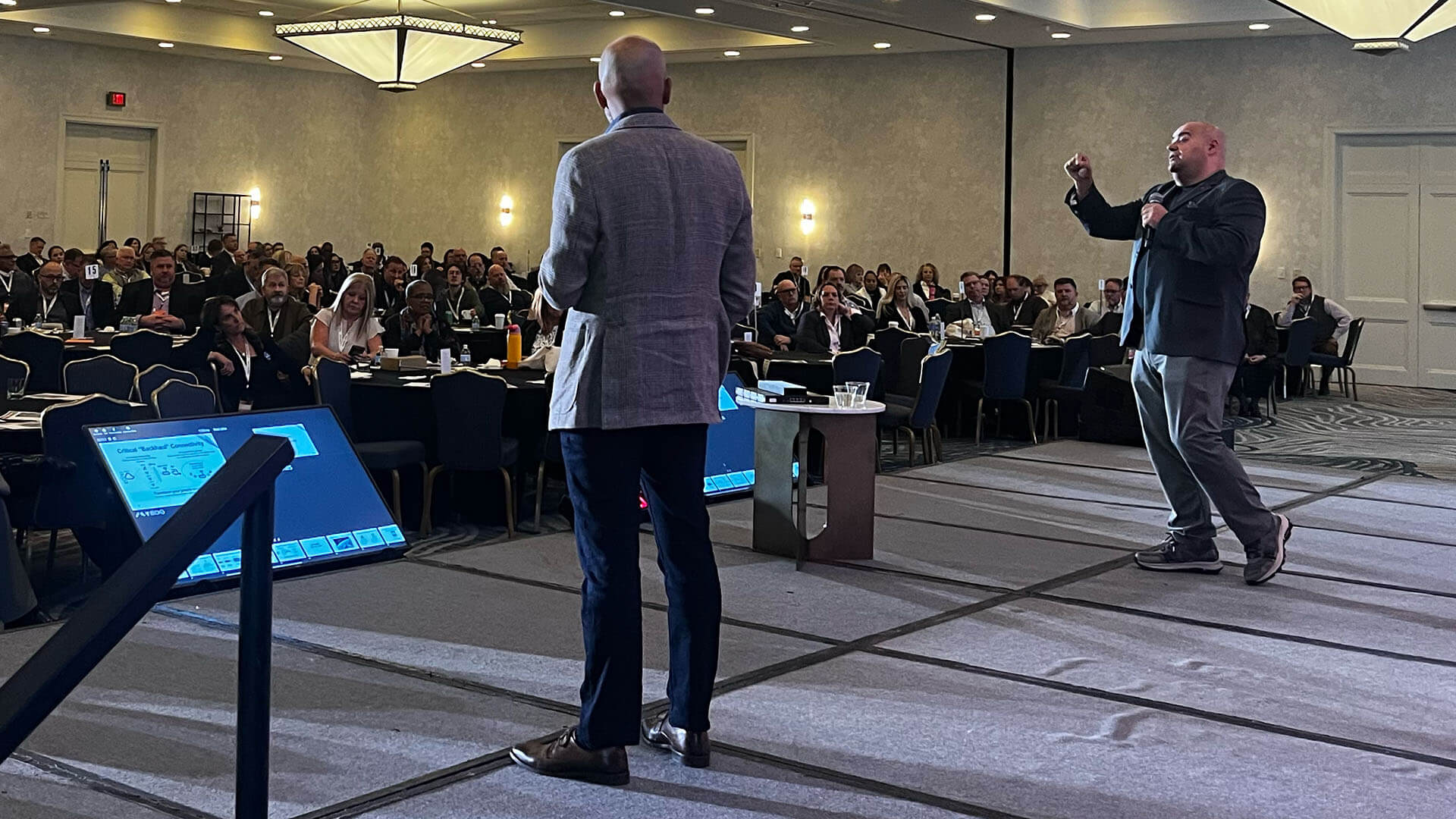
Here’s what we did with our time in front of that room.
Our team built a presentation calibrated for exactly this audience, the right balance of sales positioning and technical depth. Not too much jargon, not too much fluff. Just enough to frame the problem and set up the payoff.
Then our Director of Technical Account Management, Dean Taylor, took over. He wasn’t in the room. He was in Byhalia, Mississippi, coordinates 34.8723°N, 89.6906°W, a town of about 1,300 people in Marshall County, named from the Chickasaw word for “Great White Oaks.” No fiber backbone. No enterprise Wi-Fi. Just a rural crossroads 30 miles southeast of Memphis, sitting at 361 feet above sea level in the middle of the Mississippi Delta.
From there, Dean flew a drone and streamed live video back to a ballroom full of 200-plus sales professionals in real-time. No backup slides. No safety net. No pre-recorded footage. Just a live feed from a remote field in one of the most connectivity-challenged environments you could choose.
The kind of demo where if it fails, 200 people watch it fail.
It didn’t fail – it never does.
The real-time results from Byhalia came through flawlessly, demonstrating exactly what mission-critical connectivity looks like when it’s powered by Dejero Smart Blending Technology intelligently blending multiple network paths, including cellular, broadband or satellite, into a single, resilient connection.
The Rise of Hybrid Networks and Why It Changes Everything
This is the conversation the public sector is having right now, whether they call it by name or not, we at Dejero have been talking about hybrid networks since the company was founded 18 years ago.
The days of relying on a single connectivity path for critical operations are over. When a first responder is streaming video from a wildfire perimeter, when a defense team needs real-time drone surveillance in a contested RF environment, when a state emergency management agency is coordinating across jurisdictions, none of that can depend on one network.
That’s why we built Dejero TITAN Command, the world’s first triple 5G connectivity platform with integrated antennas for mission-critical operations. It doesn’t choose between networks. It intelligently blends them, all working simultaneously, all managed dynamically based on real-time network conditions.
This isn’t theoretical. It’s what Dean demonstrated live in that room. And it’s what agencies across the country are starting to deploy for the operations where failure isn’t an option.
The combination of Lumen’s secure, AI-ready network backbone and Dejero’s intelligent hybrid connectivity at the edge is exactly the kind of partner ecosystem that public sector agencies need, and, frankly, the kind they’ve been asking for.
The Recognition That Meant the Most
But the moment I’ll remember most from the Lumen SKO wasn’t the demo.
It was when 200-plus Lumen sales professionals, people who were not on our team and had zero obligation to be polite, began clapping in recognition of their Dejero main contact and our Business Development Manager, James Kay. I had at least 20 people come up afterward and tell me how incredible he is to work with.
I’ve been doing this a long time. I have never seen a room full of someone else’s salespeople clap for a person from a partner company. That doesn’t happen because of a good slide deck. That happens because someone has earned trust, one conversation at a time, by consistently making other people’s jobs easier.
That’s what real partnership looks like. Not a logo on a slide. Not a co-marketing agreement. A person in the field who your team trusts enough to applaud.
What Comes Next
Multiple people told us it was the most impactful presentation of the day. That’s humbling and it’s fuel.
Lumen put Partners first on their go-to-market framework for a reason. The public sector market is moving toward solutions that are proven under real-world conditions, sold by people who understand the mission, and backed by ecosystems that work together seamlessly.
Slide decks don’t close deals in this world. Demonstrations do. Relationships do. Trust does.