I’ve loved cars for as long as I can remember, since before I even had my license. I could never look at one and think, that’s perfect the way it is. I had to modify it. For me, cars have always been an expression of what can be done.
By trade, I’m a computer engineer. I did my master’s in hardware design, and for years my day job was debugging microcontrollers and circuit boards; delicate, precise work where you can’t exactly take out your frustrations by hammering something. Cars became the bigger, more physical version of that. A place to focus, to build, to actually touch the thing I’m working on with my hands.
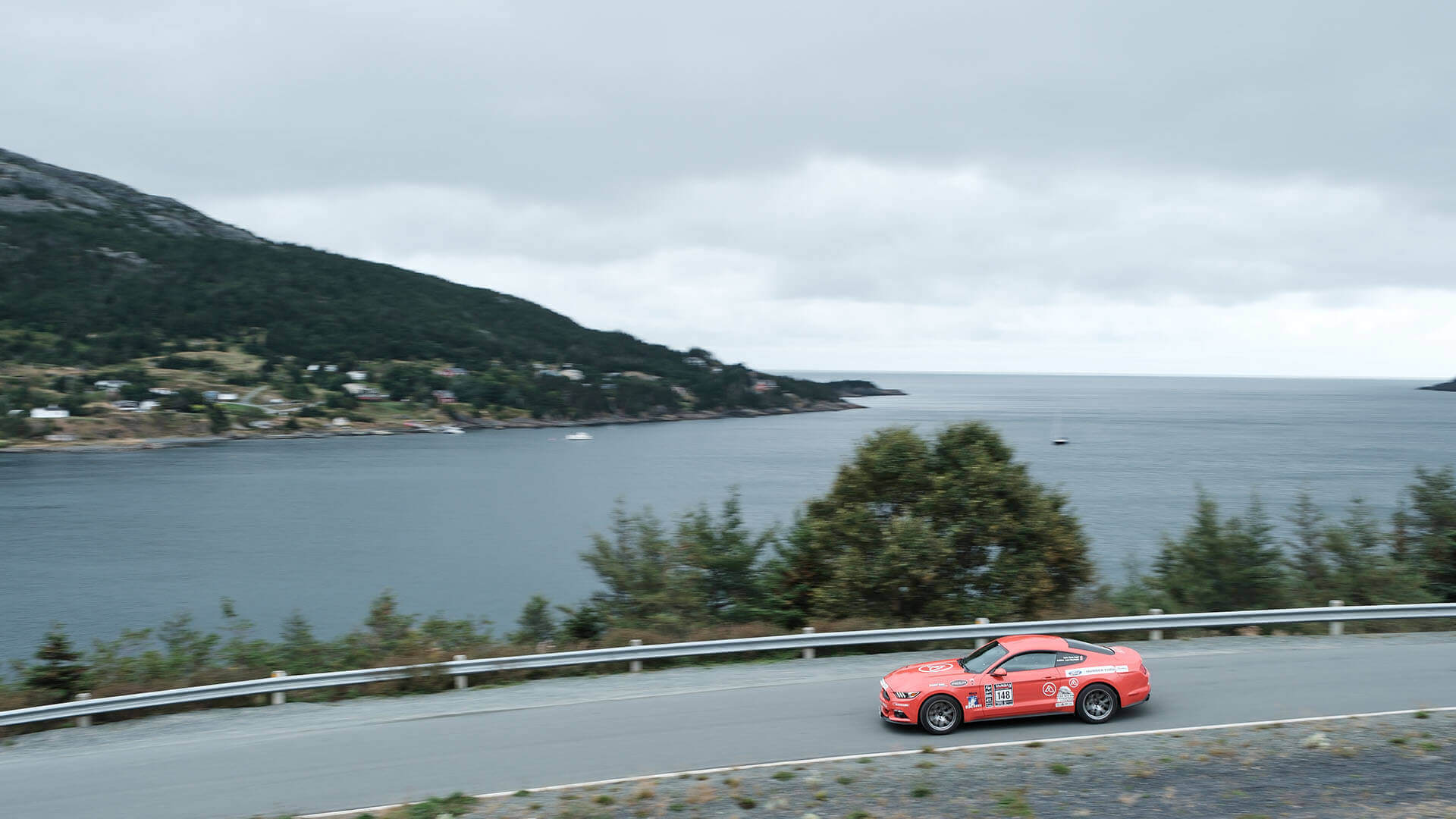
Targa Newfoundland had been sitting in the back of my mind for a decade. My friend Devo and I have known each other since university, closer to 30 years now, since we worked together at the campus pub, and cars were always part of what brought us together. Every time we got together, we’d talk about it. We’d seen the highlight videos. We knew it was one of the craziest things you could do with a car. And every time, it stayed on the horizon. Something we’d get to eventually.
Then a couple of years ago, I went through a serious health scare. Major surgery, a long recovery, and it put my own identity in question.
It forced me to actually ask myself what I want to do every day, and who I want to do it with. And if you’ve got dreams sitting on a shelf, you’d better put real effort behind them, because they’re important.
So I sat Devo down and told him: we’re modifying my car, we’re doing Targa Newfoundland, and we’re putting Dejero technology in the car too. No more someday.
The Dejero side of this almost happened by accident. While I was working through the rules for building the race car, I asked Targa’s founder, Robert Giannou, an offhand question: do you have connectivity problems up there? I was fully expecting to hear the answer was yes, somewhat. Instead, he told me it was one of the event’s biggest ongoing challenges, tied directly to the safety of race crews on closed public roads, not just to broadcasting the race. It turns out solving exactly that kind of problem is my day job. So my first offer was modest: let us light up the island so the safety teams stay connected. Our marketing team took it further, why not live-stream the entire race, from Newfoundland, around the world, and IBC 2026 in Amsterdam, Let’s show what’s actually possible when people in the field have real seamless connectivity.
We also didn’t want this to be a single-vendor story. We’ve spent the last year at Dejero wanting to show people what we can do instead of just telling them. So we brought in our encoder friends, our remote production friends, our producer friends, and built an ecosystem that can tell three stories at once: the race itself, what it actually takes to produce a race remotely with today’s technology, and who’s racing, and why.
Dejero technology is tried, tested, and proven in some of the most critical applications in the world. What’s new is plugging it into a full ecosystem and showing how repeatable for broadcast, public safety, enterprise and any other business segment.
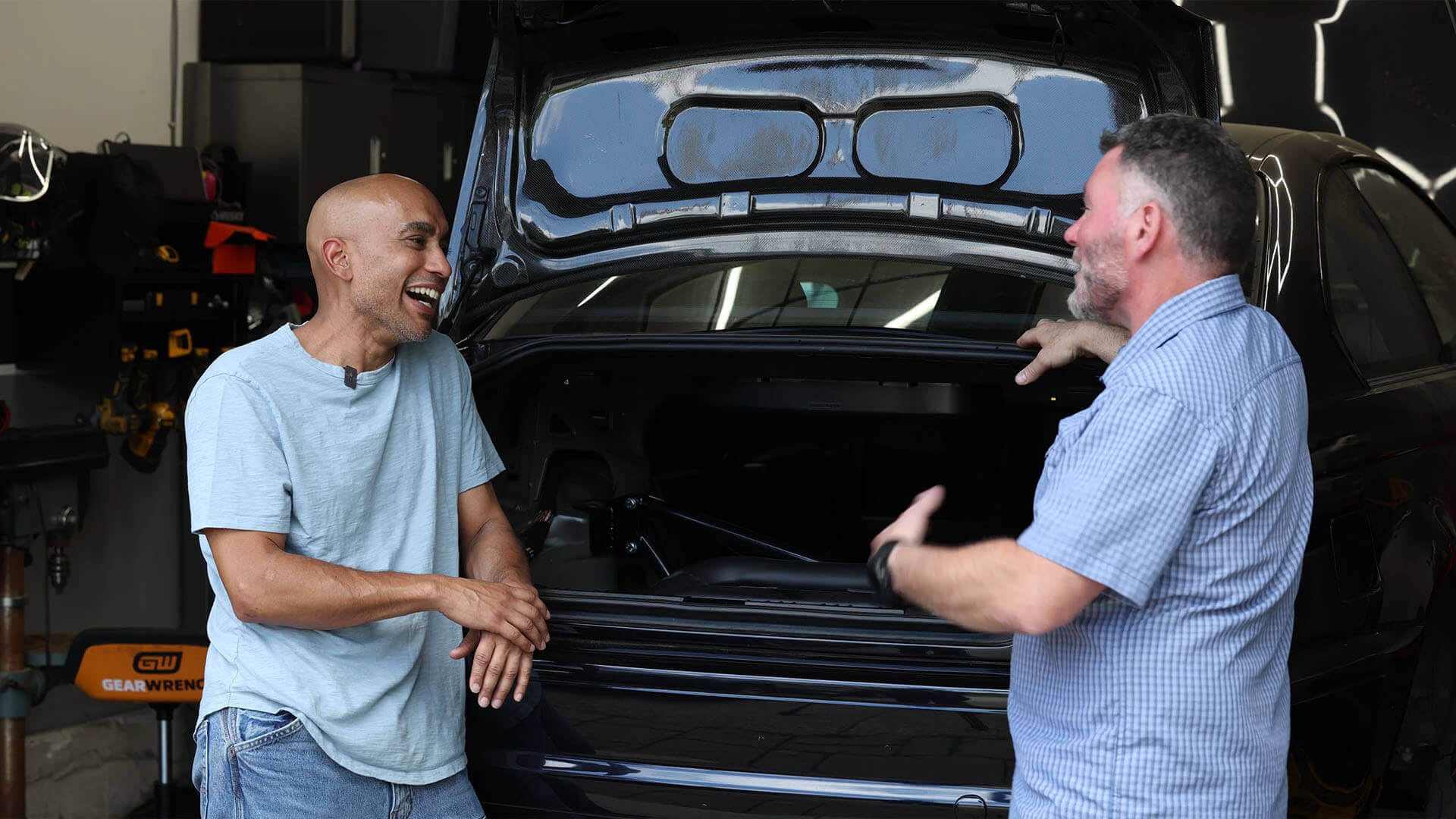
If I’m honest about what actually scares me in all this, it isn’t the technology, I trust that completely. It’s sitting in a car for a week with a guy I’ve known for 30 years, who has every story of how I drove back in university, and trusting each other to get through 2,000 kilometres of closed public roads in one piece. Devo’s my co-driver, and, since the car has already needed a few emergency fixes along the way, my makeshift mechanic too. The scariest afternoon of this whole build wasn’t a spreadsheet or a network diagram. It was handing him a grinder and asking him to cut into my own car to fit a safety brace.
We’ve spent the last six months getting up at 6 a.m. on Sunday mornings to work on the car before our families wake up, or staying up late after the kids are in bed. Devo said something to me recently that stuck with me: he’s seen me more in the last six months than in the last 20 years combined. That, honestly, might be the best part of all this.
When I tell people what we’re doing; a homemade race car, a rally across Newfoundland, a live broadcast to the entire world, the first reaction is always the same: “Really?” Then excitement. Then support. That’s the reaction I’m hoping for from everyone watching in September, too.
Success for me, at the end of all this, looks simple: Devo and I, crossing that finish line, in one piece, having helped show what’s possible when the connection never drops. The future is now. See you at the finish line.
🏁 Watch Kevin & Devo race this September
Targa Newfoundland will stream live and free on YouTube.